SECOM maintains third-party certification under the BAFE SP203-1 scheme for the design, installation and maintenance of fire detection and alarm systems. This certification confirms our competence across the full lifecycle of a commercial fire alarm system, from design specification and commissioning through to servicing and verification.
We undergo independent inspections commissioned via the SSAIB on behalf of BAFE, ensuring our fire alarm installations meet nationally recognised standards.
Speak to an expert
Speak to one of our experts in the fire team to discuss your needs and we’ll arrange a free site survey.
We’ll visit your business, discuss your fire and life safety requirements and provide you with a detailed quote for a bespoke solution that matches your needs.
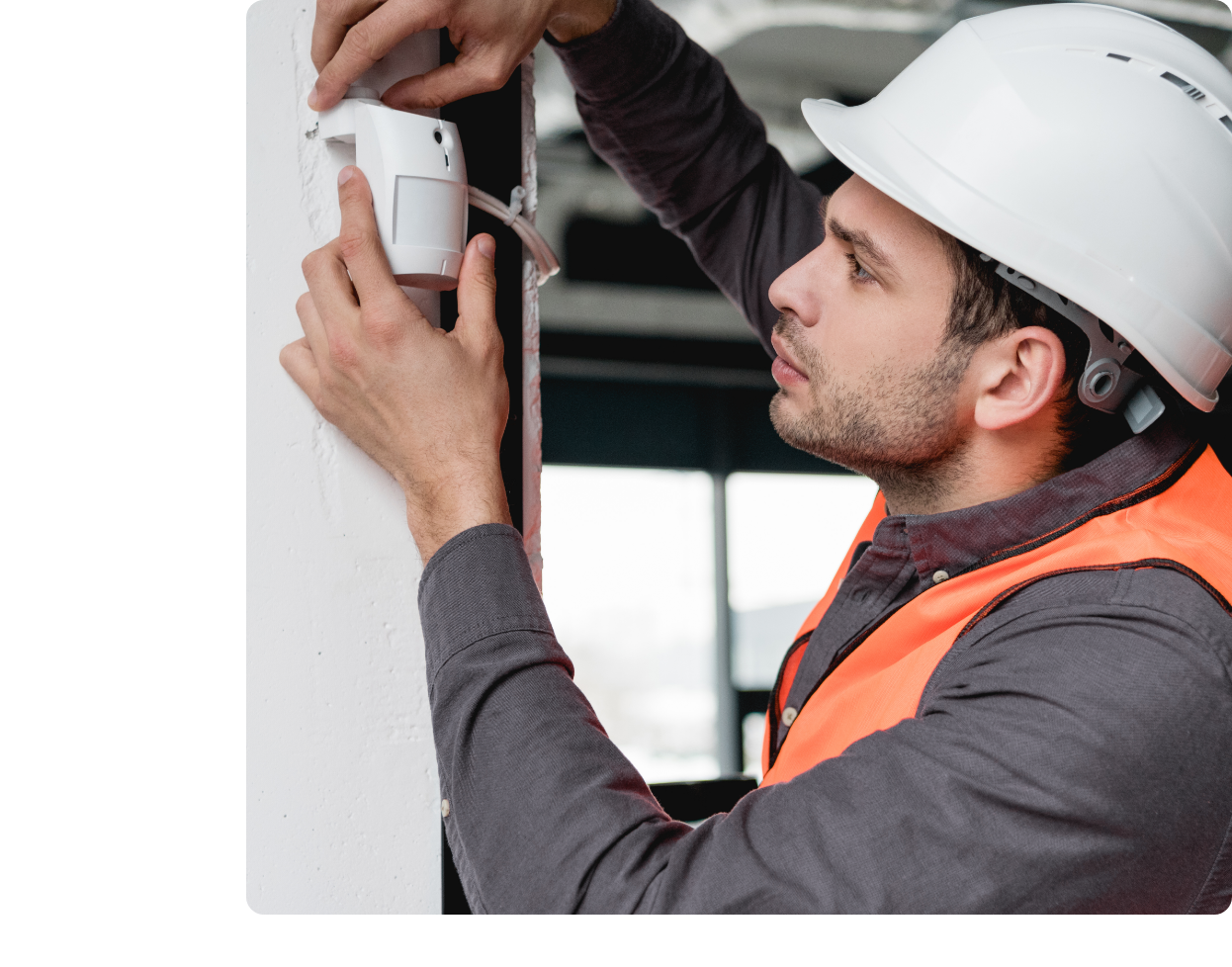
Once the quote is signed off, we’ll send a qualified SECOM engineer to install your system and show you how it all works
As a SECOM customer, your new fire detection system will be fully maintained and serviced by our expert team.
Fire detection systems must be specified in line with regulatory requirements and the operational profile of the building. Compliance is more than simply installing detectors; it is about ensuring the correct alarm category, device type and zoning strategy are applied in accordance with BS5839 and the building’s fire risk assessment.
SECOM designs fire detection systems that reflect the compliance expectations of different commercial environments, ensuring alarm performance, documentation and ongoing servicing meet inspection standards.
Commercial kitchens operate in high-heat, high-particle environments, which require careful detector selection and placement to remain compliant while avoiding nuisance alarms. Incorrect device specification can result in repeated false activations or inadequate coverage.
Heat detectors, multi-sensor devices and correctly configured alarm thresholds are selected in line with environmental conditions and regulatory requirements. Zoning structures ensure activation points are clearly identified and evacuation procedures can be followed in accordance with the site’s fire management plan.
Office environments are subject to specific detection requirements based on layout, occupancy density and escape routes. Electrical infrastructure and compartmentalisation must be considered when determining device positioning and alarm category.
Smoke and multi-sensor detection is configured to provide coverage that aligns with life safety objectives, ensuring compliance with BS5839 classifications. Panel zoning and alarm signalling are structured to support orderly evacuation and audit-ready documentation.
Industrial premises often require tailored detection strategies due to environmental conditions such as dust, airborne particles or fluctuating temperatures. Compliance in these settings depends on correct sensor type, device spacing and robust system configuration.
Detection systems are designed to reflect operational risks identified in the fire risk assessment, with zoning structured to isolate alarm events clearly. This ensures the system performs reliably while meeting regulatory inspection standards and servicing requirements.
Don’t limit yourself; protect yourself against more than fire. Explore our range of security options to create your own,
bespoke integrated security and business solution.
Compliance for commercial fire alarm systems is not limited to installation. It requires correct system design, documented commissioning, routine servicing and accurate record keeping in line with British Standards.
SECOM supports fire alarm compliance for commercial premises by delivering systems under the BAFE SP203-1 certification scheme, ensuring that design, installation and maintenance are carried out within audited quality management processes. Our engineers verify device placement, panel configuration and alarm signalling against the required system category and building layout.
We also provide structured documentation, servicing records and maintenance reporting to support inspection readiness. By aligning system performance with current commercial fire alarm compliance requirements in the UK, SECOM helps businesses demonstrate that their fire detection infrastructure has been specified, installed and maintained in accordance with recognised standards.
The difference between an addressable and a conventional commercial fire alarm system lies in how alarm devices communicate with the control panel and how activation points are identified.
In a conventional system, detectors are grouped into zones. When an alarm is triggered, the panel indicates which zone has activated but does not identify the exact device. This configuration is typically suited to smaller premises with simpler layouts and lower device counts.
An addressable commercial fire alarm system assigns a unique digital identifier to every detector, call point and interface. When a device activates, the control panel displays the precise location, enabling faster investigation and clearer reporting. Addressable systems are commonly used in medium-to-large premises where accurate event logging, fault diagnostics and structured zoning are required.
The appropriate system depends on building size, occupancy profile and operational complexity, and should always be determined through a compliant fire alarm system design process.
A monitored commercial fire alarm system for businesses provides continuous oversight by transmitting alarm signals to an Alarm Receiving Centre (ARC). This ensures that alarm activations, faults or signal interruptions are identified and processed even when the building is unoccupied.
Monitoring is particularly beneficial for premises operating outside normal working hours, multi-site estates, or buildings where immediate escalation procedures are required. When a signal is received, trained operators follow pre-agreed response protocols, which may include notifying designated contacts or emergency services.
Connecting your system to a monitored commercial fire alarm system for businesses strengthens operational resilience and ensures that alarm events are not missed due to absence of on-site personnel.
Commercial fire alarm servicing requirements in the UK are generally defined by British Standards, which recommend that fire alarm systems are inspected and tested at least every six months. The precise frequency may vary depending on system type, building use and insurance requirements.
Servicing typically includes functional testing of detection devices, inspection of control panels, verification of alarm signalling and review of system documentation. Any faults identified during inspection are recorded and rectified to ensure continued compliance and performance.
Adhering to commercial fire alarm servicing requirements in the UK supports audit readiness and helps ensure that your fire detection system remains reliable throughout its operational life.
A commercial fire alarm system upgrade assessment is usually considered when a system approaches the end of its expected lifecycle, typically around 8–10 years, or when manufacturer support becomes limited.
Upgrades may also be required where building layouts change, occupancy levels increase or repeated faults indicate system deterioration. Obsolete components, limited panel capacity or compatibility issues with modern devices can also trigger a review.
A structured commercial fire alarm system upgrade assessment evaluates whether partial replacement, panel modernisation or full system redesign is required to maintain compliance and operational effectiveness.
Yes. In addition to commercial fire detection systems, SECOM delivers integrated commercial fire detection systems as part of broader fire and life safety strategies where required.
This may include suppression systems, evacuation technologies and emergency voice systems, all designed in accordance with relevant standards. While this page focuses specifically on detection infrastructure, full system integration is available through our wider Fire & Life Safety services.
For businesses requiring comprehensive life safety coverage, our team can advise on integrated commercial fire detection systems that operate alongside other protective measures.
We also offer our protection in the fields of fire life & safety, fire stopping, fire detection, CCTV, access control systems and much more. Please mention to our experts if you’re looking to integrate multiple SECOM safety measures into your business.